Memorial Gift Acknowledgement Letter to Family
An acknowledgement letter thanks family and friends for memorial gifts given during loss. Keep it brief and genuine—mention the specific gift, its meaning, and how it helps you remember. Keepsake Grove offers personalized memorial gifts that pair beautifully with your note, so both the gift and message feel complete.
Sending a memorial gift acknowledgement letter is part of honoring those who supported you. It doesn't require perfect words—only honesty and time.
Why Send a Memorial Gift Acknowledgement Letter
Grief moves at its own pace. Writing thank-you notes might feel impossible at first. But a simple acknowledgement letter serves a quiet purpose: it tells those who gave memorial gifts that their kindness mattered. A letter also gives you a moment to sit with your grief in a deliberate way. You're not rushing. You're not obligated to say more than feels true.
Many families send acknowledgement letters weeks or even months after loss. There's no deadline. The act itself is what counts.
What to Include in Your Letter
A strong acknowledgement letter has five parts:
- Opening: Name the person who gave the gift. "Dear Sarah and Tom," or "Dear Uncle James."
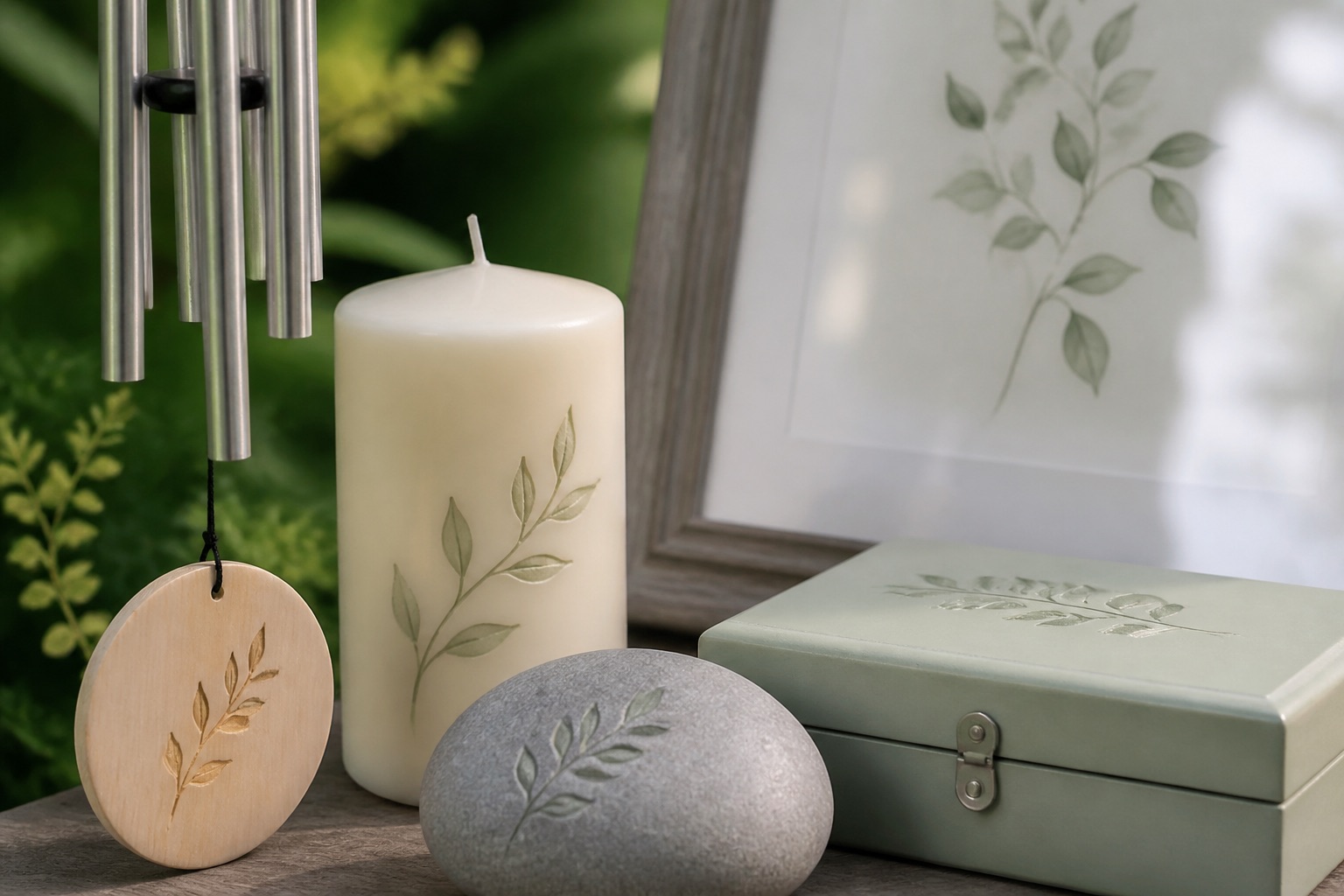
- The gift itself: Name what they sent—a wind chime, candle, engraved stone, or remembrance ornament. Mention it by name if you can.
- What it means: Say briefly how the gift helps you. Example: "Your memorial wind chime hangs where we can hear it each morning" or "The engraved keepsake box holds photos we treasure."
- Your feeling: One honest sentence about their support. "Your thoughtfulness gave us comfort" works. Don't force emotion.
- Closing: A simple sign-off. "With gratitude" or "With thanks" is enough.
The whole letter can be one short page. Shorter is often truer.
The Gift Matters Too
The memorial gift you choose—or receive—can become part of the letter itself. If someone gives you an engraved keepsake box, you might write: "Thank you for the beautiful box engraved with Dad's name. We keep it on the shelf where we see it every day."
If the gift is a memorial wind chime, you might say: "Your wind chime reminds us of quieter moments. We hear it and think of her."
A remembrance candle or memorial lantern gives you a concrete detail. You can write about lighting it, about the light it brings, about when you light it.
Even pet memorial gifts deserve specific mention. "Thank you for the memorial stone you sent. It sits in our garden where we planted flowers in Buddy's memory."
The more specific your letter, the more it honors both the giver and the gift.
When and How to Send Your Letter
You don't need to mail a typed letter in a formal envelope. Handwritten notes feel more human. Send it weeks later if that's what happens. There's no clock.
Some families:
- Write one letter and photocopy it for all givers (completely acceptable)
- Personalize each letter with the specific gift name
- Include a photo of the gift in use (the wind chime, the candle lit, the stone in the garden)
- Send a note alongside a memorial gift they're giving in return
If you're choosing a memorial gift to send with your acknowledgement, Keepsake Grove offers handwritten cards included with every made-to-order piece. You can write your thank-you message, and the gift arrives with your words attached.
Gift Ideas That Make Acknowledgement Easier
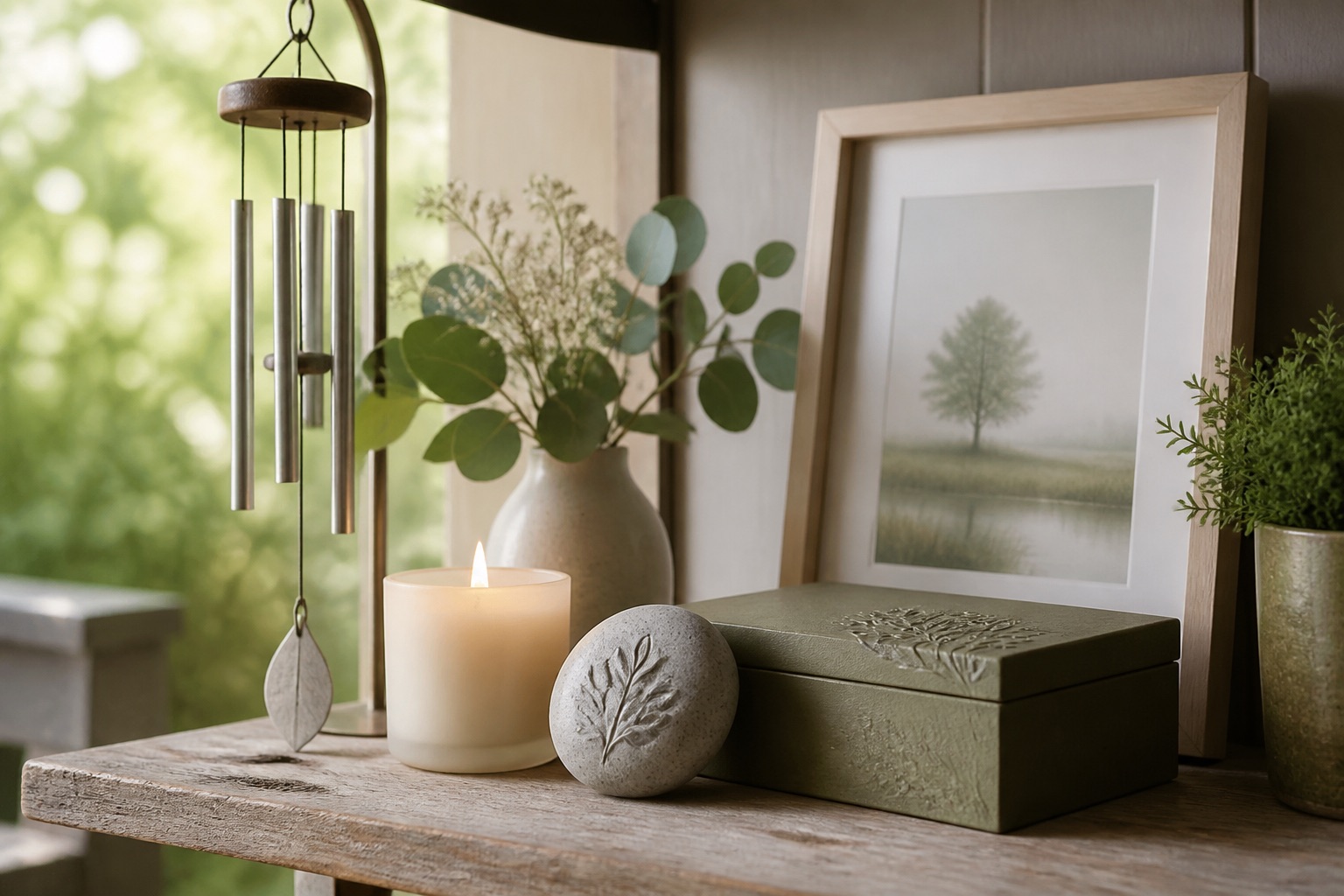
Some memorial gifts are easier to write about because they become part of daily life:
| Gift Type | Who It's For | Why It Works for Letters |
|---|---|---|
| Memorial wind chime | Anyone | Easy to mention—sounds, placement, moment of day |
| Engraved keepsake box | Family or close friends | Concrete object you can describe; holds meaning |
| Memorial ornament | People who decorate | Seasonal; tied to a ritual; easy to reference |
| Remembrance candle | Spiritual or reflective people | Lighting it becomes a habit; warm detail in a letter |
| Memorial stone | Garden lovers | Visible daily; natural integration into outdoor space |
| Cremation jewelry | Very close family | Intimate; worn; always carried; deeply personal |
When you receive—or send—a gift from any of these categories, you have specifics to write about. Your letter feels genuine because it describes something real.
What to Check Before You Write—or Send
Before you sit down to write your acknowledgement letter, gather a few details:
- Spelling of the giver's name (and full name if you're unsure)
- Exact name of the gift (wind chime, candle, stone, etc.) so you can reference it
- When you received it (if months have passed, a note about timing is kind: "I'm writing now, though you sent this months ago")
- Your own comfort level with emotion (write only what feels honest; you're not obligated to be grateful if you're angry or numb)
If you're sending a memorial gift with your letter, double-check:
- Spelling of names and dates for engraving (Keepsake Grove shows proof before production)
- The size and placement of personalization
- Delivery timeline (made to order: 2–5 business days production + 2–5 business days US delivery; see shipping details)
- Whether a handwritten card fits your message
A Few Honest Words
You don't need to sound formal or grateful if grief is still present. A memorial gift acknowledgement letter can be:
- "Thank you for thinking of us."
- "The wind chime means more to us each day."
- "We see your stone in the garden and remember."
Short, true, and sent when you're ready—that's enough. The people who gave gifts are not waiting for perfection. They're waiting to know their kindness landed.
If you're choosing a memorial gift to give or receive, explore Keepsake Grove's collections. Every piece is made to order and can include a handwritten card so your acknowledgement feels complete and personal.
---
Frequently asked questions
How long should a memorial gift acknowledgement letter be?
One page, handwritten, is standard. A single paragraph is fine too. Length doesn't equal sincerity. Write what feels true, then stop.
Can I send a group letter to thank everyone at once?
Yes. Many families write one letter and photocopy or email it to all givers. It's honest and practical. You can personalize each one by hand if time allows.
What if I don't feel grateful—what do I write?
Write what you feel. "Thank you for your support" works even if you're numb or angry. Gratitude isn't required; acknowledgement is. Your letter can be simple and still be true.
Should I mention the memorial gift by name in my letter?
Yes, if you can. "Thank you for the memorial wind chime" feels more personal than a generic thank-you. It shows the gift is being used and remembered.
How long after the funeral should I send acknowledgement letters?
There's no deadline. Many families send them weeks or months later. A delayed letter is better than no letter. Write when you're ready, even if it's half a year later.
Can I include a photo of the memorial gift in my letter?
Absolutely. A photo of the wind chime, the candle lit, the stone in your garden, or the engraved keepsake on your shelf deepens the letter and shows how the gift is part of your life.
Should I acknowledge gifts from family differently than from friends?
No. The same honest approach works for everyone. Name the gift, say how it helps, and thank them. One sentence per thought is enough.
What if I never received a card with the gift—how do I know what to write about?
Ask the giver directly (a phone call is perfect for this) or ask family who might know. It's okay to say, "I want to thank you properly—can you remind me what you sent?"