Sympathy Gift Money: When & How to Give It Well
Giving money as a sympathy gift works. It's practical, it's needed, and it shows up when flowers fade. But how you give it—and when—shapes whether it lands as generous or awkward.
This guide walks you through the real decisions: when cash fits, how to present it with care, and when a keepsake or donation might carry more meaning.
When Money Is the Right Sympathy Gift
Money works best in specific moments.
At the funeral service. Slip it into a card addressed to the deceased's name or the family. Place it discreetly in the collection basket if there is one, or hand it directly to the immediate family with a brief, warm word. No apology needed.
For families facing sudden loss. A death in an accident, illness, or crisis creates immediate expenses: hospital bills, airfare, time off work, funeral costs. Money eases that burden without requiring the grieving person to say what they need.
When you don't know the family well. A neighbour, coworker, or distant relative: money is respectful because it doesn't presume their taste, beliefs, or preferences. It simply helps.
For families in different households or time zones. If you can't attend the service, a check or bank transfer via a trusted family member is cleaner than flowers that may not arrive on time.
Alongside charitable giving. Some families ask guests to donate to a cause or organisation in the deceased's name, rather than send flowers. Monetary gifts complement that beautifully.
How to Present Money as a Sympathy Gift
Write a proper card. Handwritten is essential. Your words matter more than the amount. Something like: "I'm thinking of you during this difficult time. This is for whatever you need most right now." That's enough.
Use a card, not loose bills. Slip cash or a check into a plain white or cream card. Seal it. The card itself—whether plain or with a gentle sympathy message—frames the gift as intentional, not transactional.
Include your name. So the family can send a thank-you if they wish, or know who it came from if the card is separated.
Deliver it respectfully. At the service, hand it to a close family member or the funeral director. Don't press it into someone's hand during the eulogy or make a show of it. Quiet generosity is better.
If you can't attend. Mail it to the family's home (ask for the address via a trusted contact) or the funeral home. Include your card with your full name and, if you feel comfortable, a phone number. Avoid sending money digitally to an unfamiliar account; use a check or mail it in person if possible.
For very close family. A bank transfer or check to a specific family member is appropriate if you know them well. Text or email first to confirm the method.
How Much to Give
There's no rule. It depends on your relationship and means.
| Relationship | Typical approach | Why it matters |
|---|---|---|
| Close family | $50–$500+ | Reflects closeness; larger amounts ease real costs |
| Friend or colleague | $20–$100 | Shows care without pressure |
| Acquaintance or neighbour | $10–$25 | Respectful, thoughtful, proportional |
| Workplace collection | Pool small sums ($5–$20 each) | Collective impact without individual burden |
What matters most: give what feels genuine to you. A $20 bill with a heartfelt note outweighs a larger amount with no words.
When to Give Money + a Keepsake Together
Money and a lasting gift often work together.
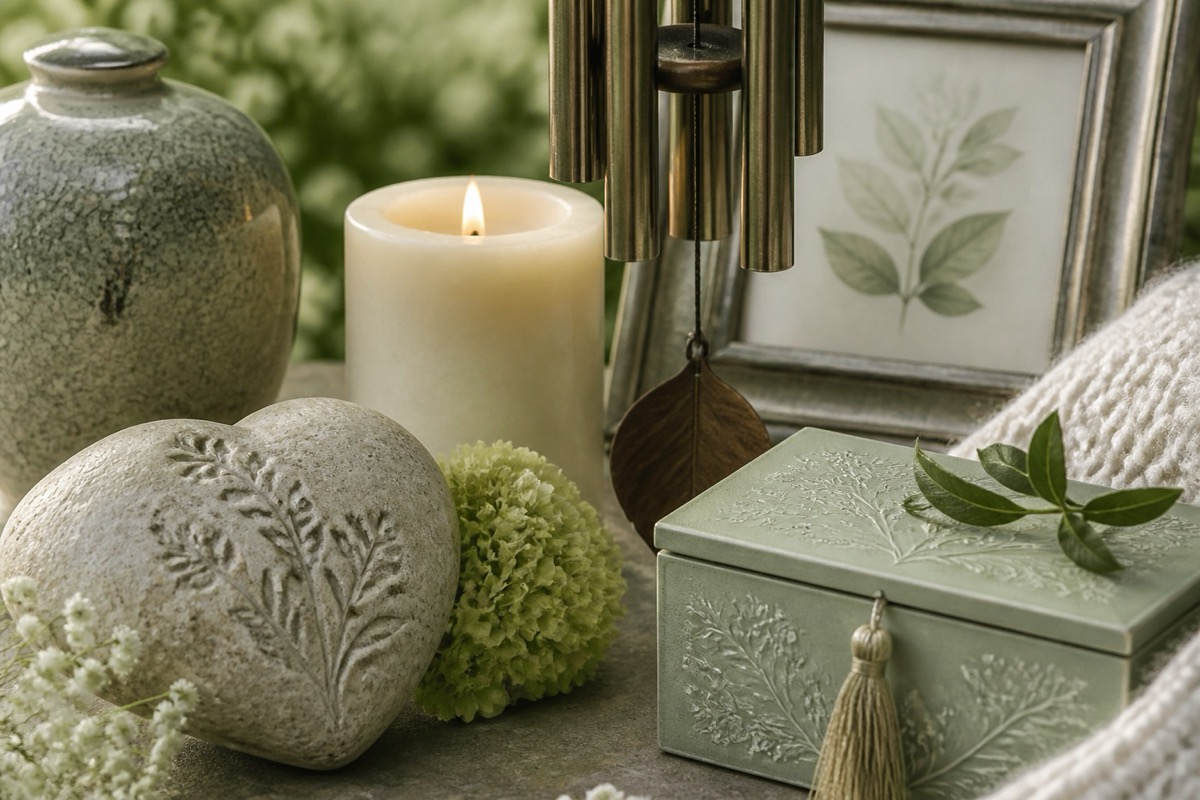
Money helps now. A memorial keepsake—an engraved box, a wind chime, a remembrance candle—lasts beyond.
Consider a keepsake if:
- You're giving money but want something the family will keep and see for years.
- The family is close enough that a personal, tangible gift feels right.
- You want to honour a specific memory or personality of the deceased.
A memorial wind chime or engraved keepsake box pairs well with cash because it's not a substitute for it—it's a companion. The money is practical; the keepsake is emotional.
Alternatives to Money (When It Might Not Fit)
Money isn't always the answer.
Charitable donation. Some families request donations to a cause, charity, or disease foundation in the deceased's name. This is just as meaningful and often what the family prefers. A printed card from the charity will notify them.
Meal or food gift. Grief eats up time. A sympathy gift basket with shelf-stable foods, tea, or treats is deeply practical and requires no thought from the grieving person.
Flowers and a note. Still classic. If you're not close enough for money, flowers + a handwritten message works.
Memorial tribute. Some families have a memorial fund or scholarship in the deceased's name. Giving to that is personal and lasting.
A keepsake alone. An engraved ornament, memorial candle, or memorial garden stone says "I remember" without cash. It's intimate and lasts.
If you've lost a pet, pet memorial gifts convey the same respect and care.

What to Check Before You Give Money
The family's financial situation. If you know they're struggling, money is a direct kindness. If they're financially stable, a keepsake or donation might resonate more. There's no shame in asking a family member: "Would cash be helpful, or is there something else the family needs?"
Religious or cultural customs. Some traditions discourage monetary gifts at funerals; others expect them. If you're unsure, ask. A quick text to someone close to the family prevents misstep.
Whether there's a collection. If the workplace or community is already taking up a collection, coordinate so the family doesn't receive ten separate $20 gifts. Pool resources instead.
Your own budget. Give what you can afford. A modest amount with genuine words beats a strained, large gift.
Whether to sign your name. Yes. Always. Unsigned money feels impersonal. Your card is proof of your intention.
---
Timing: When to Give It
At the service is ideal: it's expected, and families are present to receive it.
The day after the funeral also works: slip it into their mailbox or hand it to them when dropping off a meal.
Within the first week is respectful. After a month, it starts to feel late.
For a memorial or anniversary event (six months or a year later), money still works, especially if the family is still managing costs or setting up a scholarship or foundation.
Don't delay beyond a month without a good reason.
---
Pairing Cash With a Meaningful Keepsake
If you want to give money and something lasting, Keepsake Grove makes that easy. Money is practical. A remembrance keepsake is permanent.
Think about who the deceased was:
- A gardener? A memorial garden stone outdoors.
- A loved one you want to remember daily? A memorial candle or wind chime.
- Someone whose ashes are kept? Cremation jewelry holds them close.
- A parent? Loss of mother gifts or similar speak directly to that bond.
All Keepsake Grove gifts are made to order, with a proof shown before production. You can personalize with names, dates, or a brief message. See how personalization works for details.
Production takes 2–5 business days. US delivery is 2–5 days after that. International orders (UK/EU) take 5–10 days. Check shipping details for your location.
---
The Bottom Line
Sympathy gift money is kind, practical, and appropriate. Give it in a card with your name and a brief, warm note. Deliver it at or soon after the funeral. The amount matters less than your presence and words.
If you want to add a lasting keepsake—something the family will see and remember for years—browse Keepsake Grove's sympathy and memorial collections. Money helps now. A keepsake helps always.
When in doubt, ask a family member what would help most. Grief doesn't follow rules. Your genuine intention does.

Frequently asked questions
Is it rude to give cash as a sympathy gift?
No. Cash is appropriate and often welcomed because it's practical and doesn't presume the family's taste. Present it in a card with your name and a handwritten note, and it's a respectful gift.
How much money should I give as a sympathy gift?
Give what fits your relationship and budget. Close family might give $50–$500+; friends or colleagues, $20–$100; acquaintances, $10–$25. What matters most is your genuine words, not the amount.
Should I give money at the funeral service or mail it later?
At the service is ideal because it's expected and discreet. If you can't attend, mail a check to their home within a week, or arrange delivery via a trusted family member.
Can I give money and a gift together?
Yes. Money helps with immediate expenses; a keepsake gift like an engraved box or memorial candle lasts for years. Both together show deep care.
What if I don't know the family's preferences—is money or a keepsake better?
Money is safer because it doesn't presume taste or belief. But if you're close enough to give a keepsake, personalised memorial gifts (wind chimes, garden stones, candles) carry lasting meaning alongside cash.
Do I need to sign the card when I give money?
Yes, always. Unsigned money feels impersonal. Include your full name and a brief handwritten message so the family knows who it came from and can thank you.